Quick Summary
- The word “Bohemian” comes from the French bohémien, originally used to describe the Romani people who reached France via Bohemia (modern-day Czech Republic). It was later adopted by Parisian artists and intellectuals who shared their nomadic, anti-establishment lifestyle.
- Bohemian fashion has evolved through distinct eras: French Romanticism in the 1830s, the Pre-Raphaelite Aesthetic Movement in the 1860s, the Beat Generation in the 1950s, the Hippie movement of the 1960s and 1970s, and the Boho-chic revival of the early 2000s.
- The aesthetic is defined by fluid silhouettes, natural fabrics, layering, artisanal embellishment, global craft influences and a colour palette drawn from the earth.
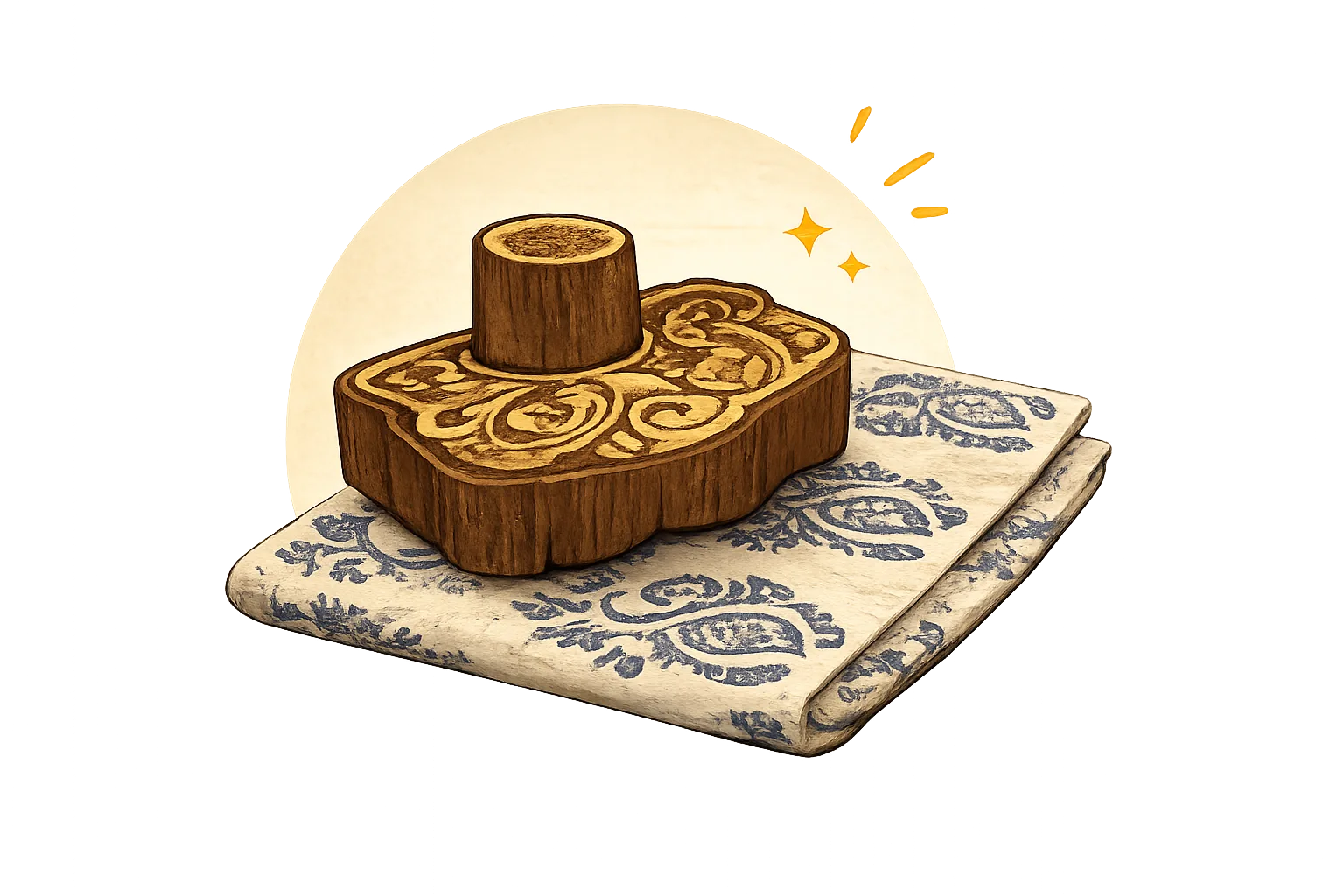
- Indian hand block printing, particularly from Jaipur, is one of the most central textile traditions in the Bohemian aesthetic globally.
- In 2025 and 2026, Bohemian fashion is experiencing a major, sophisticated revival, driven by luxury fashion houses and intersecting with trends like Cottagecore and Coastal Grandmother.
- Key silhouettes include the maxi dress, kaftan, peasant blouse, wide-leg trouser, wrap skirt and kimono robe.
- The Bohemian aesthetic is now deeply aligned with slow fashion, ethical sourcing and sustainability, making it one of the most commercially relevant categories for conscious wholesale buyers globally.
There is a moment in the history of fashion when a word stops describing a place or a people and starts describing a way of seeing the world. That is what happened with “Bohemian.” It began as a geographical misunderstanding. It became a two-century-long conversation about art, freedom, craft and the refusal to dress the way the world expects you to.
That conversation is still happening. And in 2025, it is louder than it has been in decades.
Where the Word “Bohemian” Actually Comes From
The story begins not with artists or fashion, but with people who had nothing to do with either.
When the Romani, a nomadic ethnic group whose ancestors migrated from the Punjab and Rajasthan regions of northern India, arrived in France in the 15th century, they entered through Bohemia, the western region of what is now the Czech Republic. The French, operating under the false assumption that these travellers were Czech natives, called them bohémiens. The name stuck, applied broadly to a people defined, in French eyes, by their nomadic lives, their layered and eclectic dress, and their existence entirely outside the boundaries of mainstream European society.
That Romani sartorial tradition, born of necessity rather than stylistic choice, was itself deeply rooted. Layered skirts, mixed textures, bold colour combinations, eclectic garments gathered across decades of travel. It was the visual language of people who carried their homes on their backs.
By the early 19th century, something interesting happened in Paris. Young French artists, writers and musicians, rejecting the rigid materialism of the post-Revolutionary bourgeoisie, began settling in the same low-rent, impoverished districts where Romani communities lived. They shared the same marginal geography, the same economic precarity and the same fundamental rejection of mainstream convention. The term bohémien transferred to them naturally. And Bohemianism was born, no longer an ethnic designation but a cultural ideology: a deliberate, principled refusal to dress, live or think the way respectable society required.
What began as the language of displacement became the uniform of defiance.
Two Centuries of Bohemian Fashion: A History
The French Romantics and the Pre-Raphaelites (1830s to 1890s)
The first visible act of Bohemian fashion provocation happened in Paris in 1830, at the premiere of Victor Hugo’s controversial play Hernani. The young French poet Théophile Gautier arrived wearing a flamboyant scarlet waistcoat at a time when bourgeois men dressed in nothing but sombre, formal black. It was not just a clothing choice. It was a declaration. Beauty, Gautier argued, needed no utilitarian justification. Fashion could exist purely for art’s sake. The modern Bohemian dandy was born.
By the 1860s, the centre of Bohemianism shifted to England with the rise of the Pre-Raphaelite Brotherhood and the broader Aesthetic Movement. Rejecting the corseted, heavily structured silhouettes of Victorian fashion, these artists and their circles pioneered what they called “Artistic Dress,” loose, flowing gowns with relaxed sleeves, uncorseted bodies and unprecedented freedom of movement. The Aesthetic Movement went further still, demanding that clothing, like all objects, should be fundamentally beautiful and hand-crafted, a direct challenge to the spiritually empty output of industrial mass production. This was the first time fashion was explicitly framed as an ethical and artistic position rather than merely a social one.
The Beat Generation and Post-War Paris (1950s)
After the devastation of the Second World War, Bohemianism resurfaced in two cities at once. In Paris, the Rive Gauche and Saint-Germain districts became home to an existentialist, intellectually charged iteration of the aesthetic. In America, the Beat Generation emerged in Greenwich Village and along the West Coast, adopting a stripped-down, anti-materialist uniform as a visual rejection of post-war consumerism. The Beats laid the philosophical groundwork for everything that followed.
The Hippie Trail and the 1960s to 1970s Revolution
The counterculture of the 1960s and 1970s radically expanded Bohemianism’s visual vocabulary. Driven by the rejection of the Vietnam War, the embrace of Eastern spirituality and the ethos of flower power, young people adopted vividly coloured, globally eclectic attire. The 1969 Woodstock festival cemented this aesthetic in the global imagination.
Critically for the story of Indian textiles, this era produced the Hippie Trail, an overland route stretching from Europe through the Middle East to India and Nepal. As young Western travellers made their way through Rajasthan and Gujarat, they brought back hand block-printed cotton kaftans, indigo-dyed fabrics and artisan-made textiles. Icons of the era were photographed wearing Indian block-printed cotton, cementing the fusion of traditional Eastern craft with Western countercultural identity. The connection between Indian hand block printing and the Bohemian aesthetic was established in this era. It has never broken.
The Boho-Chic Revival (Early 2000s)
The early 2000s brought the commercialisation and mainstreaming of Bohemian fashion, rebranded globally as Boho-chic. Driven by celebrities rather than countercultural movements, this era was defined by hip-grazing coin belts, slouchy suede boots, oversized sunglasses, ruffled maxi skirts and tiered linen dresses. Unlike the politically charged Hippie movement of the 1960s, the 2000s Boho-chic era was primarily an aesthetic exercise, driven by personal styling and luxury fashion houses rather than anti-war sentiment.
The 2024 to 2026 Renaissance
Following years dominated by stark minimalism and the clean-girl aesthetic, Bohemian fashion has returned with force. The critical catalyst was designer Chemena Kamali’s debut as creative director for French luxury house Chloé, whose Fall/Winter 2024 collection resurrected the spirit of 1970s Chloé through sheer billowing fabrics, delicate lace, silk organza blouses and multitiered hems. This contemporary iteration is softer and more sophisticated than any previous revival, focusing on “undone” elegance and natural beauty rather than festival-ready maximalism. It is the most commercially significant Boho moment in twenty years.
The Core Visual Elements of Bohemian Fashion
The Bohemian aesthetic is not built around rigid rules. It is built around a feeling: effortless, fluid, globally traveled and deeply personal. But certain elements appear consistently enough to constitute a visual language.
Fluid, unstructured silhouettes. The foundational principle is the rejection of physical restriction. Bohemian garments float away from the body, relying on the volume and drape of the fabric rather than darts, boning or structured tailoring to create their shape. Everything is designed to move.
Maximalist layering. A masterful Bohemian look is never one piece worn simply. It is the accumulation of textures, lengths and accessories, a deliberate juxtaposition of delicate and heavy, sheer and structured. A fine silk blouse under a suede jacket edged with leather fringing. A lace camisole under a heavy printed kimono. Multiple stacked bracelets, long beaded necklaces and oversized scarves creating what looks like chaotic luxury but is in fact highly considered styling.
Artisanal embellishment. Macramé, tassels, dense beadwork, rich embroidery and hand-applied surface decoration are central. These details signal the handmade, globally sourced quality that defines the aesthetic.
Grounding textures and accessories. The contrast between diaphanous fabrics and rugged accessories is essential. Wide-brimmed floppy hats, woven straw totes, heavy tooled leather belts worn low and loose on the hips, and slouchy suede boots or bare feet complete the visual. The goal is to project the illusion of a wardrobe assembled over decades of global travel, thrown together with brilliant apparent carelessness.
The Fabrics of Bohemian Fashion
The Bohemian aesthetic has always maintained a fundamental resistance to synthetic, mass-produced fabric. The visual drape, the natural texture and the environmental philosophy all require natural fibres.
Cotton and linen are the foundation. Lightweight, breathable and exceptionally capable of holding natural dyes, these fabrics, particularly loosely woven Indian muslin and mulmul, are used for the voluminous peasant blouses, wide-leg trousers and tiered maxi skirts that define the silhouette. Their natural tendency to wrinkle contributes to the desired “undone” quality.
Silk and chiffon elevate the aesthetic into luxury territory. Fine silk organza, sheer chiffon layers and slip dresses provide the ethereal volume and gentle transparency seen on modern Boho runways.
Velvet and suede provide the necessary textural weight to ground the lighter layers. Heavy velvet kimonos, suede jackets and structured leather accessories create the juxtaposition that prevents Bohemian looks from feeling insubstantial.
Crochet and lace serve not just as trim but as primary fabrics. Macramé and chunky crochet reference 1970s handicraft directly, while broderie anglaise and eyelet lace inject a vintage romanticism that softens the overall look.
The consistent preference for natural fibres is not incidental. It is philosophical. Bohemian fashion has always rejected the industrial and the synthetic. That rejection is now also an environmental position, which is one of the reasons the aesthetic aligns so naturally with the slow fashion movement.
The Colour Palette of Bohemian Fashion
Bohemian colour rejects the neon artificiality of fast fashion in favour of a sophisticated, nature-derived spectrum built on three distinct layers.
Earth tones form the grounding base. Rust, terracotta, olive green, mustard yellow and deep chocolate brown are ubiquitous. These shades echo the natural pigments, madder, local clays, pomegranate rind, that textile artisans have used for centuries. They feel organic because they are derived from organic sources.
Jewel tones inject exoticism and depth. Deep emerald, ruby red, sapphire blue and amethyst appear in heavier garments, embroidered kaftans and velvet pieces, reflecting the globally traveled, culturally rich sensibility at the heart of the aesthetic.
Faded neutrals and deep indigo complete the palette. The coveted “lived-in” quality of Bohemian fashion requires colours that appear sun-bleached or naturally aged. Off-whites, soft creams, pale beiges and the deep, uneven indigo blues characteristic of Bagru natural dyeing dominate the base layers. The most characteristic Bohemian combination pairs a muted, faded neutral base with a sudden vibrant pop of jewel-tone embroidery or block-printed motif, letting the artisanal detail do the work.
The Iconic Silhouettes
A handful of garment forms have transcended seasonal trends to become permanent fixtures of the Bohemian wardrobe.
The maxi dress is the absolute symbol of Boho fluidity. Tiered ruffles, ankle-grazing hems and voluminous skirts designed to respond dramatically to the wearer’s movement. Best in lightweight cotton or silk. Endlessly versatile from beach to dinner.
The peasant blouse is loose-fitting with dramatically puffed or ballooned sleeves and elasticised or off-the-shoulder necklines. Often features intricate smocking or embroidery across the chest. Worn tucked into denim or loose over skirts with equal success.
The kaftan is a single-piece, unstructured T-shaped garment of Middle Eastern and North African origin. Its fluid drape and flat canvas make it ideal for showcasing vibrant hand block prints and hand-stitching. It moves from luxury resort wear to formal evening attire with almost no effort, which is why it remains one of the most commercially successful Bohemian silhouettes in global wholesale markets.
Wide-leg trousers reject skinny or sharply tailored fits entirely. Flowing, high-waisted, crafted from linen, lightweight cotton or leather fringe. Best paired with a statement coin belt or tucked-in blouse to define the waist without restricting it.
The kimono robe serves as long, open-front outerwear, a dynamic layering tool rendered in velvet, silk or heavily printed cotton. One of the most versatile pieces in the Bohemian wardrobe.
The Role of Indian Hand Block Printing in Bohemian Fashion
Of all the global craft traditions that feed the Bohemian aesthetic, Indian hand block printing from Jaipur holds the most central and enduring position.
The connection is not accidental or recent. Archaeological evidence points to block-printed textile fragments from 9th-century Egypt being traced back to Indian artisans from Gujarat, demonstrating a global trade reach that predates the Bohemian movement by a thousand years. When the Hippie Trail brought Western travellers through Rajasthan in the 1960s and 1970s, the hand block-printed cottons they encountered and brought back to Europe and America were not new. They were the output of a 500-year-old craft tradition still being practiced in the same towns, by the same communities, using the same wooden blocks.
What made Indian block print so resonant with the Bohemian aesthetic then, and what keeps it at the centre of global Boho wholesale demand now, is a combination of qualities that no industrial process can replicate. The organic imperfection of each hand-stamped impression. The depth of colour achieved through natural indigo and madder dyes. The visible evidence of human skill in every repeat. These are exactly the qualities the Bohemian aesthetic prizes above all others.
The two major block printing traditions from Jaipur serve different ends of the Bohemian market. Sanganeri printing, with its fine botanical motifs on white or light grounds, suits the light, airy, resort-wear side of the aesthetic. Bagru and Dabu printing, with deep indigo backgrounds, bold geometric patterns and the characteristic organic texture of mud-resist, anchors the earthier, more textured and maximalist end. Together they cover the full range of the Bohemian colour palette and visual vocabulary.
For a deeper understanding of these two traditions and what makes each one distinctive, our comparison of Sanganeri and Bagru printing covers the full picture. And for the complete story of how block-printed fabric is made from raw cotton to finished cloth, our step-by-step guide walks through every stage of the process.
World Craft Traditions in the Bohemian Aesthetic
Indian textiles are the most prominent, but the Bohemian aesthetic draws from craft traditions across the globe.
Moroccan Sabra silk, derived from agave plant fibres and woven by artisans in the Atlas Mountains, contributes to the Boho interior and fashion market with its highly elastic, virtually wrinkle-free texture, natural botanical dyes and tribal geometric embellishment. It is a zero-waste, biodegradable fabric that aligns perfectly with the sustainability values increasingly central to the modern Boho market.
Mexican San Antonino embroidery from Oaxaca is central to the iconic Bohemian peasant blouse. Organised through local cooperative artisan associations, this Zapotec embroidery tradition produces intensely detailed, multicoloured silk floral and fauna motifs on cotton, giving each garment a genuinely one-of-a-kind character.
The consistent thread across all of these traditions is the same one that runs through Indian block printing: human skill, natural materials, irreproducible imperfection and the visible mark of the hand.
Bohemian Fashion and Sustainability: A Natural Alignment
The connection between Bohemian fashion and the modern sustainability movement is not a recent marketing development. It is a philosophical continuity that runs all the way back to the Pre-Raphaelites’ rejection of industrial mass production in the 1860s.
The original Bohemian ideology explicitly rejected consumerism, materialism and the exploitation inherent in standard manufacturing. Modern consumers drawn to the Boho aesthetic carry those same values, expressed now in the language of supply chain transparency, organic certification, artisan fair pay and carbon footprint reduction.
The craft traditions at the heart of Bohemian fashion, Indian hand block printing, Moroccan weaving, Mexican embroidery, are naturally aligned with these demands. They use no industrial machinery. They run on human kinetic energy and natural materials. Their outputs are traceable to specific communities and specific hands. The slow, multi-stage production process that makes them expensive is also the process that makes them environmentally responsible.
The timeless, vintage character of Bohemian silhouettes further reinforces this alignment. A well-made kaftan or a quality block-printed maxi dress does not go out of fashion in a season. It is worn for years, then decades. That longevity is the opposite of the fast fashion model, and it is increasingly what conscious consumers in the USA, Europe and Australia are actively seeking.
Our approach to sustainable manufacturing at Moharis is built on exactly these principles: natural materials, natural dyes, artisan-led production and nothing that cannot be accounted for at every stage of the supply chain.
Bohemian Fashion in 2025 and 2026: The Modern Look
The current Bohemian revival is the most sophisticated the aesthetic has ever been. Three distinct directions are shaping what modern Boho looks like today.
The intersection with Cottagecore has introduced rural romanticism, soft vintage florals, muted cream backgrounds, delicate puff sleeves and a gentle “grandmacore” sweetness that softens the traditional, harder-edged Boho elements. The result is a quieter, more intimate version of the aesthetic rooted in domesticity and agrarian beauty.
The Coastal Grandmother influence represents the maturation of the Bohemian sensibility. High-quality linens, crisp wide-leg trousers, woven raffia accessories and an unfussy neutral palette of creams, navies and soft blues. It is Bohemian in philosophy, refined in execution. Less festival, more farmers market and morning beach walk.
Elevated Boho-Maximalism, driven by Chloé’s recent runway collections, embraces the fearless layering of contrasting world prints and rich textures while pioneering the concept of “undone” elegance. The goal is a confident, slightly disheveled aesthetic that signals a liberated state of mind rather than adherence to a dress code.
Across all three directions, the unifying thread is quality over quantity. Natural fibres over synthetic. Artisan-made over mass-produced. Story over speed.
How the Bohemian Market Differs Globally
Understanding regional nuances matters enormously for wholesale buyers building collections for specific markets.
In the USA, UK and Europe, demand is driven by luxury boutique networks and fashion week trickle-down. Consumers want refined romanticism, verifiable sustainable credentials and vintage authenticity. Ruffled sheer blouses, elevated maxi dresses and artisan-crafted kaftans perform strongly. Sustainability certifications and supply chain transparency are increasingly non-negotiable purchasing criteria.
In Australia, the aesthetic leans toward coastal Boho. Warm climate, beach culture and a strong domestic sustainable fashion scene shape demand toward lightweight organic cottons, flowing sundresses and relaxed resort-wear silhouettes suited to outdoor living.
In the Middle East, the Bohemian market is one of the fastest-growing fashion segments globally. The market demands luxury, modesty and cultural heritage combined with Bohemian fluidity and intricate detailing. High-end embroidered kaftans, contemporary abayas with Bohemian cuts, maxi dresses with long sleeves and heavily decorated modest resort wear are the strongest categories. The kaftan in particular sits at a natural intersection of Middle Eastern heritage and global Boho aesthetics, making it one of the most commercially significant wholesale products for this market.
The Brands Shaping the Modern Boho Market
A handful of labels define global consumer expectations in this space and are useful references for wholesale buyers building their own brand positioning.
Chloé under Chemena Kamali is currently the most powerful force in the global Boho revival, with her recent collections sparking a massive surge in demand for ruffles, vintage accessories and the broader 1970s-inflected aesthetic.
Spell, founded in Byron Bay, Australia, dominates the premium classic Boho space with vintage-inspired prints, ethical production and a strong coastal identity. It sits above fast fashion but below runway luxury, a positioning that resonates strongly with the core Boho consumer.
Johnny Was, established in 1987 and named after a Bob Marley song, remains a stalwart of the American Boho-chic market. Known for heavily coloured artisan-inspired embroidery on luxury fabrics, it caters to a confident, affluent demographic through global luxury boutiques.
Pippa Holt has elevated the traditional kaftan into a sought-after luxury staple through garments hand-woven by artisans with bold stripes and motifs, bridging traditional craft and high-end resort wear.
These brands share a common quality: they treat artisan-made textiles not as a cost-saving sourcing strategy but as the core value proposition of the brand. That is the positioning that resonates in global Boho markets in 2025 and 2026.
Why Hand Block Print is Central to the Bohemian Wholesale Market
For wholesale manufacturers sourcing from Jaipur, the global Boho revival is not background context. It is a direct commercial opportunity.
Hand block printed textiles from Rajasthan satisfy virtually every criterion the modern Bohemian consumer prioritises: natural fibres, natural dyes, artisan-made, traceable origin, visible human skill, organic imperfection and a living cultural heritage. The GI-protected status of both Sanganeri and Bagru printing provides the verifiable provenance that boutiques in Europe and the USA increasingly need to justify premium pricing to their customers.
The breadth of the Jaipur block print tradition means a single wholesale partner can supply the full range of the Bohemian aesthetic. Fine Sanganeri florals on white cotton for the light, resort-wear end of the market. Deep Bagru indigo Dabu prints for the earthy, maximalist and statement-fashion end. Kaftans, maxi dresses, kurtas, co-ord sets, home linen, quilts and scarves, all from the same craft tradition, all with the same authentic story.
Explore our wholesale catalog at Moharis to see the full range, or read about the people and artisan community behind every piece we make.
Moharis is a Jaipur-based manufacturer, exporter and wholesaler of hand block printed clothing, fabrics and home linen. We work with boutiques, sustainable fashion brands and sourcing companies across the USA, Europe and the Middle East. For wholesale inquiries, write to us at info@moharis.com or visit our wholesale page.